The 1960's was the decade when the focus of fashion became what young people were wearing on the street, rather than what was exhibited in haute-couture fashion shows. Also, men became much more style-concious, where previously, fashion had been seen as mostly a woman's concern.

Fashions changed a lot in the course of the 1960's. In the early part of the decade, the 'cool' look for men was sharp suits with narrow bottoms to the leg (sometimes called 'drainpipe' trousers). Women tottered along on high 'stiletto' heels, and many wore their hair up in the 'bee-hive' style. Together, the hair and heels made them look taller than they were. The dresses women wore were designed to emphasize the curves of their hips and bust. Underneath they wore stockings and suspenders, and forcefully uplifting bras. The ideal body was thought to be the full figure of the reigning US sex goddess, Marilyn Monroe.

In the mid-sixties, the 'in' look changed radically. There was a fashion revolution that started in London. By 1964 the United Kingdom had become the centre of young fashion. Boutiques sprang up everywhere and Carnaby Street and the King's Road in London became the trendy places to be seen.
Sixties fashions used new materials and bold colours and designs. Mary Quant, a famous sixties designer, did more to change fashion than anybody else. One of her inventions was tights, for wearing with the mini skirt (another one of Mary Quant's designs) - the new fashion craze, known as 'The new look'. For the first time, women showed their thighs in public. Bell-bottom jeans, skinny rib jumpers, knee-high boots and platform shoes were other new fashion trends. Trousers also became acceptable for women to wear. Mary Quant together with fashion designer John Stephen, hairdresser Vidal Sassoon, and photographer David Bailey, made 'Swinging London' the fashion capital of the world. Swinging London generated new fashions that were meant to be fun and were aimed specifically at young people.

Leading London models such as Jean Shrimpton and Twiggy (shown left) made fashionable a skinny look with no visible waist or bust. Women wore their hair long and straight with a fringe, or cut short in one of the striking geometrical looks pioneered by Vidal Sassoon.
Designers experimented with fun new materials such as vinyl and PVC, making shiny wet-look raincoats.
As women's skirts got shorter, young men's hair grew longer. Collarless Beatles jackets were the height of fashion. Broad 'kipper' ties came in, and the bottom of men's trousers began to flare outwards. Black polo-neck sweaters were fashionable along with hipsters.

Jeans and T-shirts, associated before with manual workers, became the basic clothing of young people across the world. This was part of a general revolt against formality. Many young men rejected suits and ties as too stuffy and conventional.
Earlier fashions had been designed to make men and women look different. But from the mid-sixties, many fashions were 'unisex', such that it was often difficult to tell the sexes apart, and many older people found this very disturbing.
Fashion became a battleground between young and old. Long hair for boys shocked traditionalists as much as the mini-skirt. There was opposition to the new styles in the adult world too. For example, women in fashionable trouser suits were refused entry to some restaurants and clubs.
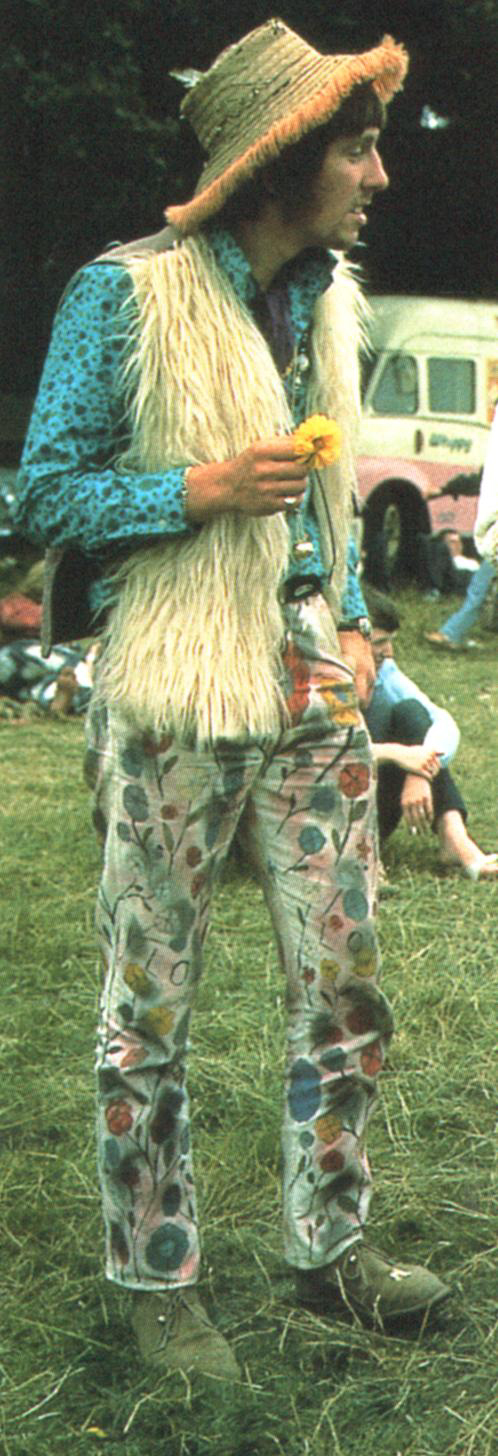
Towards the end of the 1960's, more shifts in style took place. The spreading influence of the Hippie movement led to the wearing of embroidered blouses, Afghan coats and ethnic skirts, beads and even cow bells. Young men's hair became even longer, and beards and moustaches grew in popularity, but the decade-long trend towards shorter hemlines stopped. Medium-length 'midi-skirts' and ankle length 'maxi-skirts' came in alongside the mini. Some women wore a long maxi-coat over a mini-skirt.
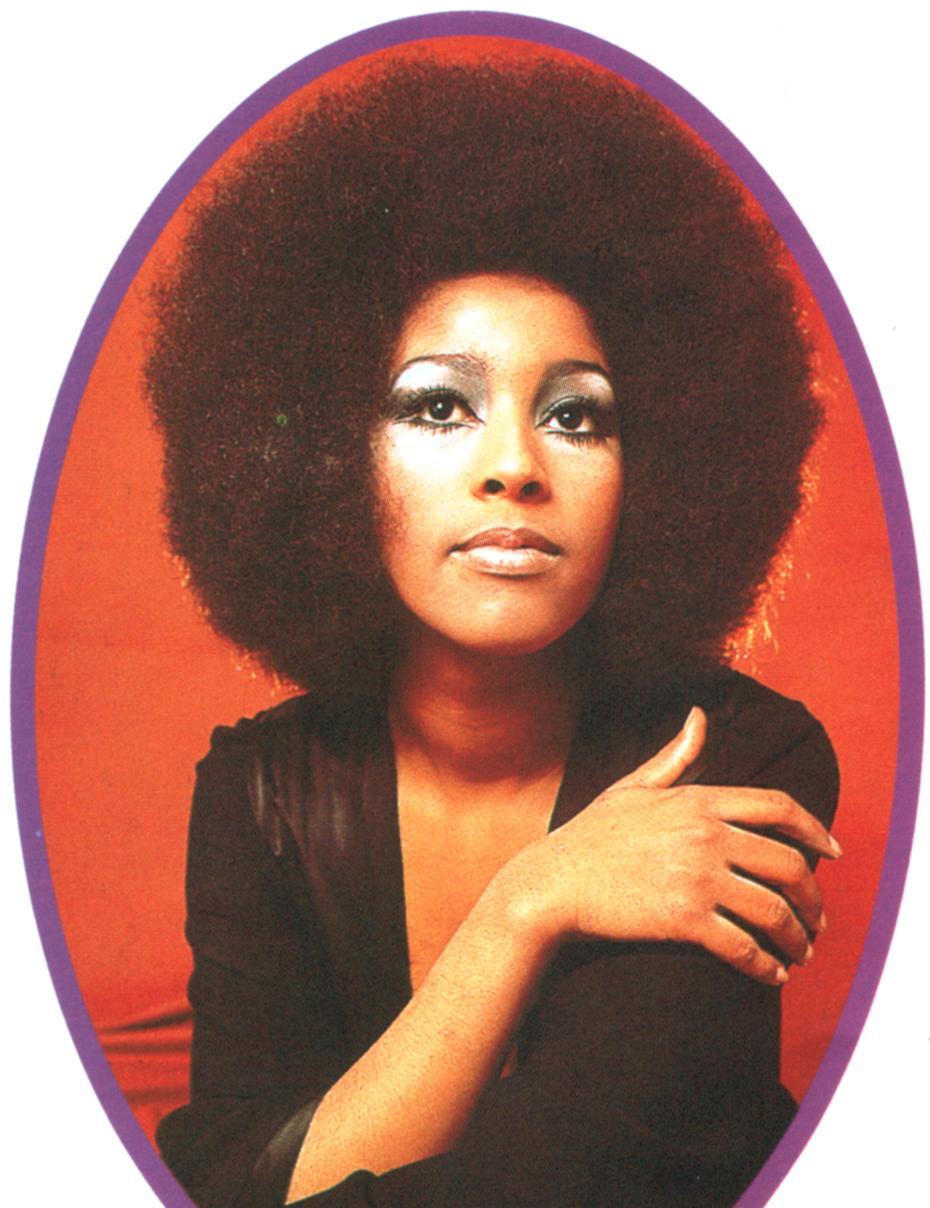
For African Americans, the 1960's marked a style revolution, though of a different kind. At the start of the decade, most African Americans liked to be as 'yellow' as possible - that is, pale rather than dark-skinned. They also used to straighten their hair, taking out the crimp natural to African hair. The 'black is beautiful' slogan of the second half of the 1960's led many African Americans to change their attitude to their looks. The more radical adopted Afro hairstyles, designed to emphasize their ethnic origins. Some also wore African-style, brightly-patterned fabrics. Without going that far, most African Americans were influenced by the trend to take pride in their ethnic identity.
Growing up in the 60's - Main page